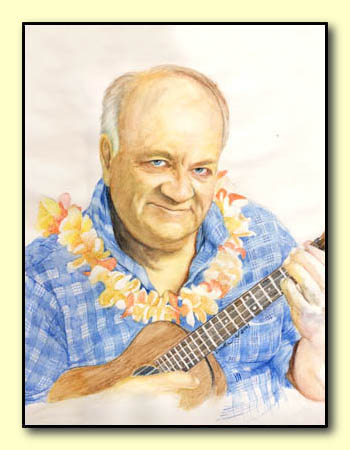
Lyle Ritz
As a highly regarded studio bassist in Los Angeles in the 1960s and 1970s, Lyle Ritz could hardly have imagined the impact of a few earlier recordings he had done using a considerably smaller four-string instrument. His two ʻukulele jazz recordings on the Verve label in the late 1950s, How About Uke? and 50th State Jazz, were unlike anything previously recorded. Ritz will always be known as the brilliant pioneer in the area of ʻukulele jazz. His recordings are legendary and have inspired countless players both in Hawaiʻi and on the mainland. Ritz returned to his ʻukulele roots in the mid-1980s, releasing a number of more recent recordings as well as an instructional book of his arrangements.
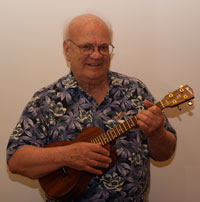
Lyle Ritz was born January 10, 1930 in Cleveland, OH. Originally a tuba player in the 1950s at USC, Ritz learned to play bass as an Army draftee during the Korean War from a fellow draftee, Lennie Niehaus, the lead alto saxophonist for Stan Kenton.
In a part-time job at Southern California Music Company in Los Angeles, Ritz first picked up an ʻukulele and became attracted to its sound. He purchased a Gibson tenor and became adept at chord work. It was at this job that a Verve representative heard him playing his ʻukulele and approached him with a recording offer.
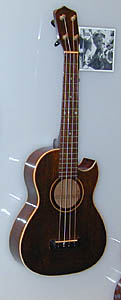
Ritz recorded two jazz ʻukulele albums with his Gibson on Verve Records, How About Uke? released in 1958 and 50th State Jazz released in 1959. Although he set the ʻukulele aside for the mainland studio recording scene, these two albums were hugely influential among a whole generation of Hawaiian ʻukulele players, including such names as Peter Moon, Roy Sakuma, and Moe Keale.
In the early 1960s, Ritz was part of the legendary "Wrecking Crew" of the Hollywood studio scene — the legendary group of session men and women who played on many of the 1960s' greatest hits. He became one of the most sought-after studio bass players in Los Angeles, hired for over 5,000 individual recording sessions. From the 1960s through the 1980s, Lyle contributed to well-known jazz, rock, and pop hits behind many of the top names of the era: Frank Sinatra, Linda Ronstadt, Herb Alpert, The Righteous Brothers, Sonny and Cher, The Beach Boys, Ray Charles, Tina Turner, and Johnny Mathis.
Ritz also worked in the world of television and film with his bass as part of the soundtrack to shows such as The Rockford Files, Name That Tune, and Kojak. Burt Bacharach and John Williams called him for their Oscar-winning movie scores. His only professional ʻukulele gig during this time was playing the ʻukulele track behind Steve Martin's rendition of "Tonight You Belong to Me" in The Jerk.
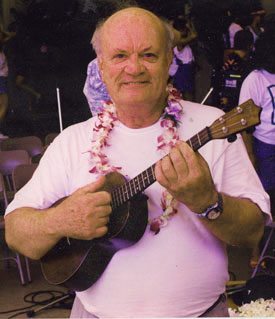
In the late 1980s, Ritz once again started to play the ʻukulele regularly after becoming friends with musicians such as Ohta-San and Roy Sakuma. He moved with his family to Oahu and appeared four years in a row at the annual Ukulele Festival sponsored by Roy Sakuma. In 1998 he participated in the ʻUkulele Hall of Fame's Ukulele Masters concert series.
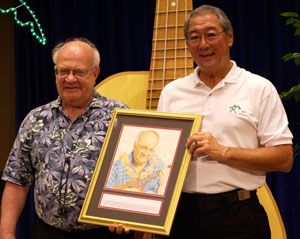
Ritz lived in Oregon with his family and released a variety of ʻukulele jazz CDs since his rediscovery of the uke: A Night of Ukulele Jazz Live at McCabe's (with Ohta-San), I Wish You Love (with Rebecca Kilgore), No Frills, and Time... Ukulele Jazz on the Roy Sakuma label.
Undisputedly the world's most revered jazz ʻukulele player, his recordings shaped the musical conception of the instrument for an entire generation of highly influential performers and teachers in Hawaii. He was inducted into the ʻUkulele Hall of Fame on June 22nd, 2007 at the Portland Ukulele Festival — coinciding with the 50th anniversary of his first ʻukulele album.