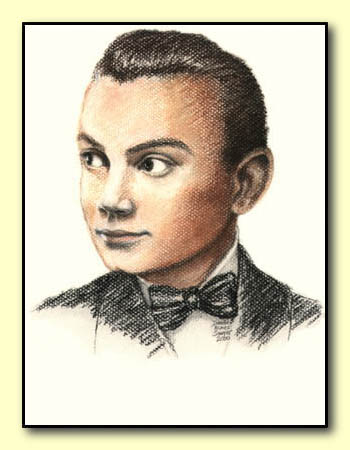
Cliff Edwards
The image of a 1920s ʻukulele-playing crooner stems from the popularity of Cliff Edwards, best known as "Ukulele Ike." Although he is now remembered worldwide as the voice of Jiminy Cricket and singer of the Oscar-winning "When You Wish Upon a Star" in the 1940 Disney movie Pinocchio, he established himself long before as an amazing ʻukulele strummer with a unique three-octave voice and a scat-singing style he called eefin'. From the 1920s to the 1960s, he appeared in over 100 movies, recorded hundreds of songs, and compiled collections of standard tunes arranged for the ʻukulele. His immense popularity during the Vaudeville era made "Ukulele Ike" a household name.

Cliff Edwards was born in 1895 in Hannibal, Missouri. As a teenager in St. Louis, he sang in movie theaters and saloons, and soon began to accompany himself on ʻukulele. He developed an unusual singing style with his three-octave vocal range, in which he would solo his unique voice as if he was playing a kazoo. He called it "eefin." This singing style was copied by many others of the period, and it evolved into what is generally known as scat-singing. Edwards' 1922 recordings with Ladd's Black Aces and Bailey's Lucky Seven are the first known recorded examples of scat singing.
In addition to his ʻukulele-playing fame, Edwards had a long career on Broadway and in Hollywood. He appeared in over 100 movies and made hundreds of recordings, not necessarily all associated with ʻukulele music. His biggest success came later in his career, when he was cast as the voice of Jiminy Cricket and sang the Oscar-winning song "When You Wish Upon a Star" in the 1940 Walt Disney movie Pinocchio.
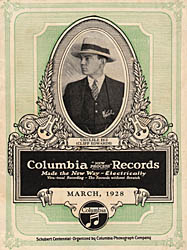
When we think of the 1920s, we conjure up an image of a crooner with his ʻukulele. This image is based on the beautiful voice, ʻukulele mastery, and unrivaled popularity of Ukulele Ike. As the story goes, Edwards acquired his nickname early on while performing in Chicago. A particular waiter who could never remember Edwards' first name always referred to him as Ike, and "Ukulele Ike" was born.

Although Edwards used the ʻukulele primarily for accompaniment, his ʻukulele playing was that of a master. He had the ability to get near-symphonic sounds from his strumming. He was so popular in Vaudeville of the 1920s that Ukulele Ike was a household name. He also helped to popularize the instrument by publishing three collections of standards arranged for the ʻukulele.